
With local councils under increasing pressure to deliver housing, manage urban growth, and balance community expectations, University Centre Reaseheath’s final-year Landscape Architecture students are getting a front-row view of the decisions shaping our towns and countryside.

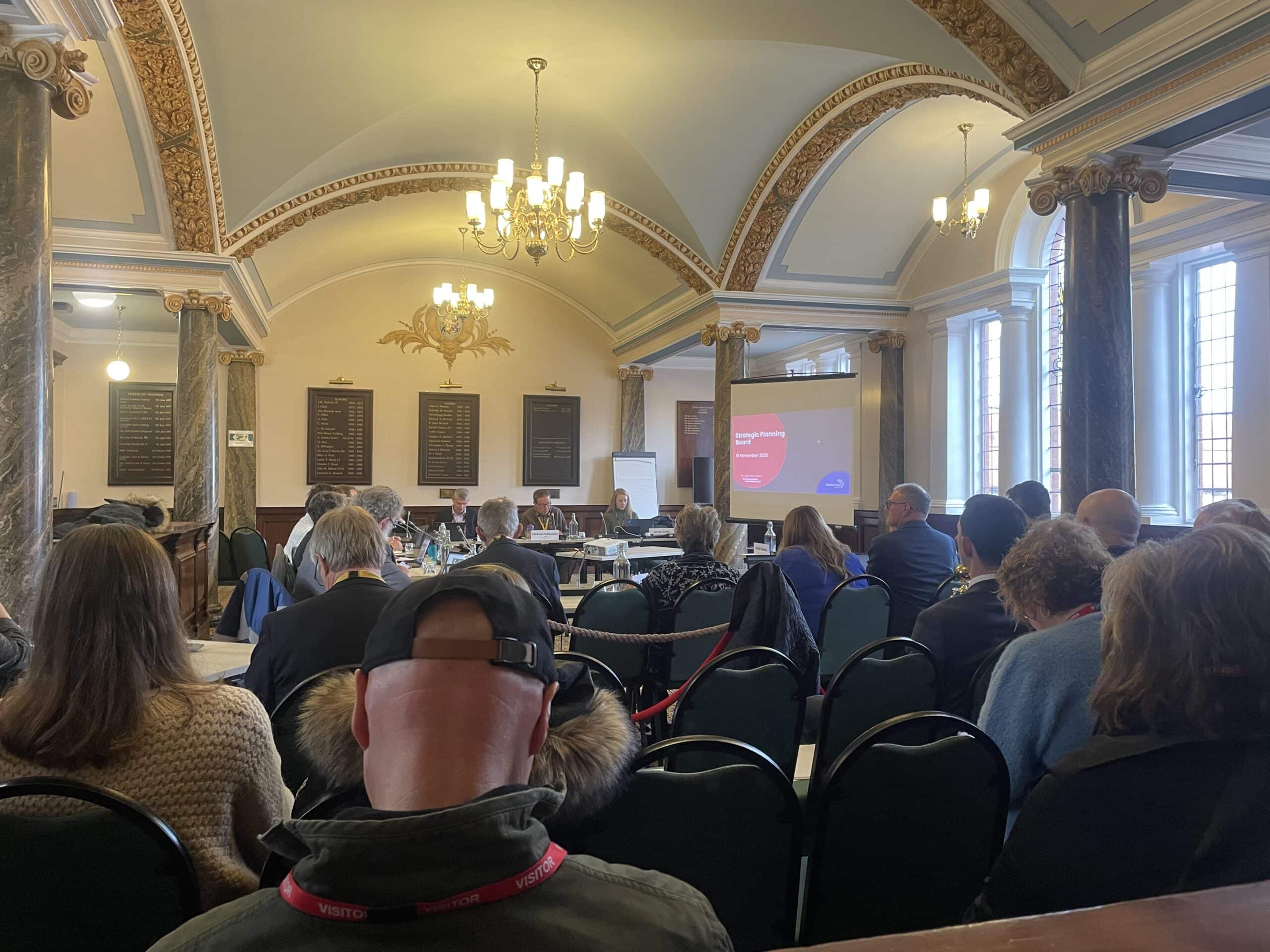
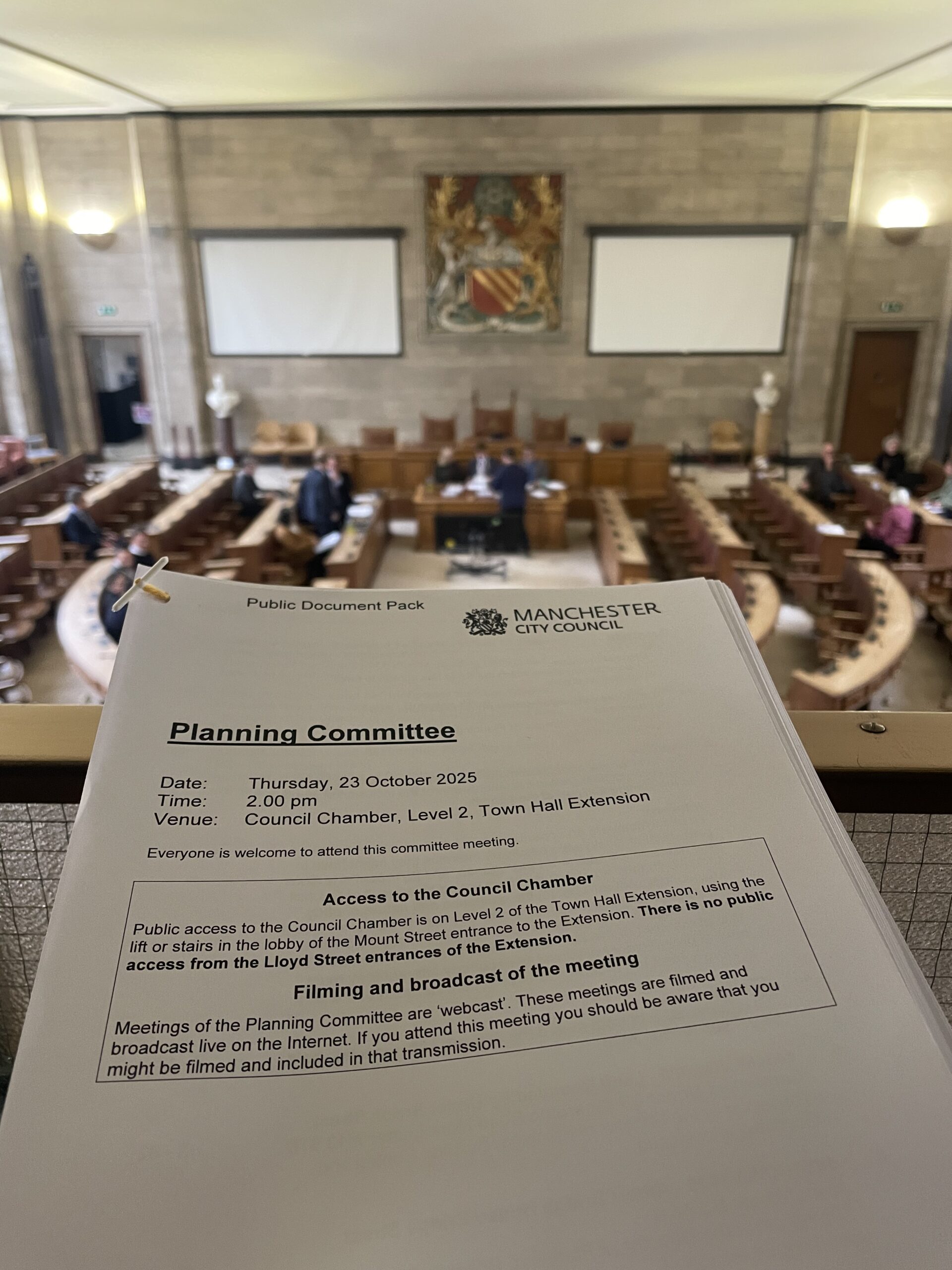
As part of their Planning and Environmental Legislation module, students recently attended planning committee meetings across Cheshire East and Manchester, observing firsthand how Local Planning Authorities operate and how approaches can vary dramatically between regions.
Students reported that Cheshire East Council took a methodical approach, with officers presenting illustrated briefings on each application, prompting detailed debates among councillors. Manchester City Council meetings, in contrast, were faster, with minimal discussion and fewer challenges from elected members.
Observing these differences gave students insight into how community involvement, urban density, and local expectations influence the planning process.
Students noted that meetings in Cheshire East tended to include illustrated officer presentations and longer discussions, while meetings in Manchester were more concise, with fewer items debated in detail.
According to Tom Palethorpe, a final-year student, this provided valuable perspective on the range of processes that exist across different councils.
“Observing the committees showed me how proposals are considered in practice,” he said. “Seeing the types of questions councillors asked and the responses from officers gave me real-world examples of procedures we’ve studied in class.”
Tom also highlighted the importance of community input. “Public speakers play a key role in sharing local perspectives with councillors, helping them understand the potential impact of proposals,” he said.
“It was clear how much councillors’ engagement with their communities influences decision-making.”
Reflecting on the professional value of the experience, he added: “This observation has given me practical insight into how proposals move through the planning process. It’s experience that complements what we learn on the degree and will be useful in my future career in landscape architecture or planning-related roles.”
Craig Bailey, module lead, said, “This exercise is designed to bridge classroom learning with professional reality. Students gain practical insight into legislative frameworks, decision-making processes, and the challenges councils face – skills that are essential for a career in planning.”
University Centre Reaseheath has a strong track record of preparing students for the planning and landscape architecture sectors. Around 40% of the most recent graduates in Landscape Architecture secured graduate-level roles within Local Planning Authority departments within months of completing their degree. This success reflects Reaseheath’s wider commitment to being industry-focused and career-ready, ensuring students leave with the skills and experience employers are looking for.
By embedding real-world observation into the curriculum, University Centre Reaseheath is equipping students with both professional confidence and a deeper understanding of how planning shapes communities, knowledge that is increasingly critical as councils face growing scrutiny and demand for sustainable, responsive development.
Visit our blog listings page or view our latest blogs below.
Canine Behaviour
Canine Behaviour
Animal Behaviour